


Sasol Midland’s PVC Closure Plan: Qualify the Import Grade Before Switching
Sasol plans to stop VCM and PVC at its Sasol Midland plants in June 2027. Check the replacement grade and usable delivery before switching.
Sasol said on 20 November 2026 that it plans to stop producing vinyl chloride monomer and polyvinyl chloride at Sasol Midland in Sasolburg, South Africa, at the end of June 2027. The company said it intends to honor its PVC supply commitments through June and is developing an imported supply arrangement. It did not identify the imported grades, origin or allocated quantities in that announcement. Read the company announcement
Treat the production date and the replacement delivery date separately
The June date is a disclosed plan for two manufacturing facilities. For a purchase linked to the affected supply, use qualified stock, confirmed incoming deliveries and planned consumption to estimate how long the incumbent grade will last. Separately, estimate when the approved replacement can first enter production, including arrival and incoming inspection. Escalate if the replacement will be available after the incumbent stock runs out.
Sasol also announced that it expects to stop supplying caustic soda to external customers following the closure. That is a separate stream with its own customers and qualification requirements. The announcement supplies no basis for assuming that every buyer receives material from the affected site.
Qualify the grade on the process that will use it
Start with the incumbent resin and the converter’s approved limits. For a rigid profile or pipe line, buyers may need to compare grade class, measured properties on common methods, feed behavior and an actual extrusion trial. A buyer with a different conversion application will set different acceptance points. Ask for a representative trial lot and a traceable certificate before changing the written specification.
| Decision | Ask for | When to make the commitment |
|---|---|---|
| Preserve existing coverage | Qualified stock, confirmed deliveries and planned consumption | When the remaining supply has been reconciled with the production schedule |
| Approve a replacement | Proposed origin and grade, lot evidence, and trial results on your own process | When production and quality have accepted the material |
| Place the first commercial order | Named grade, delivery terms, firm allocation and an agreed approach to rejected material | When both the grade and its route are confirmed |
Keep the three signals visible in the purchase schedule
Record the announced stop date, the date qualified incumbent stock is expected to run out, and the earliest production date for the approved replacement. Keep each estimate current as deliveries or expected consumption change. For purchases outside the affected route, check the actual origin and supplier commitment before changing inventory assumptions. Follow Resin industry updates for new disclosures.
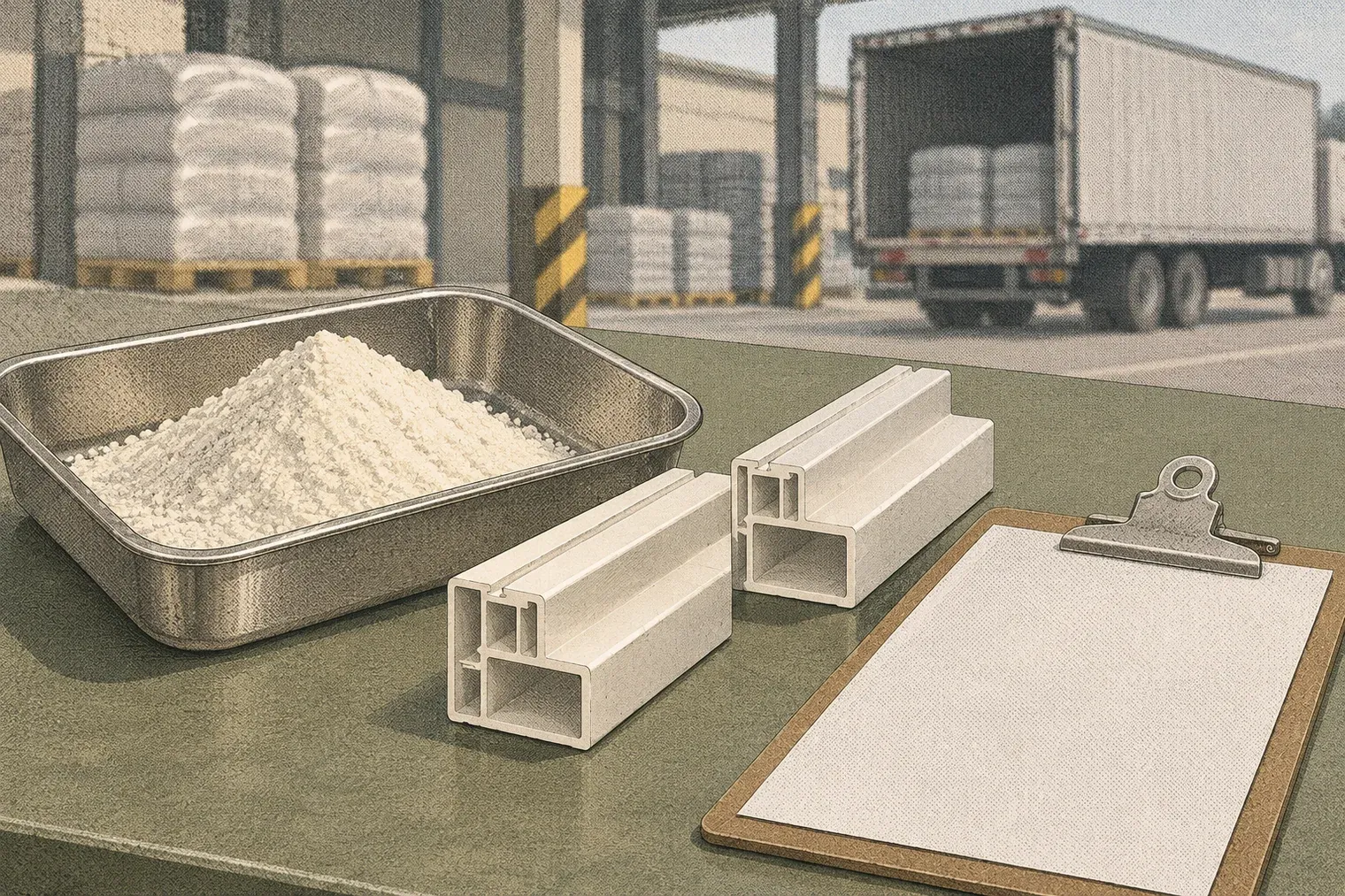
Cover illustration of a PVC qualification workflow. It depicts a generic setting.