


Borouge opens its Burghausen plant. What should a PP foam trial verify?
Borouge opens its Burghausen plant. See how to compare melt strength and MFR, run a PP foam trial and set procurement acceptance criteria.
Borouge International inaugurated an advanced polypropylene plant in Burghausen, Germany, on 17 November 2026. In its 18 November announcement, the company said the investment exceeded €100 million and the installation tripled the site’s capacity to produce high-melt-strength polypropylene (HMS PP). The announcement gives no annual tonnage or allocation by grade. A buyer qualifying foam sheet still needs to identify the specific material available for a trial and agree what the trial must demonstrate.
Ask for the grade and the method
Melt flow rate (MFR) and melt strength answer different questions. MFR describes flow through a die under a stated temperature and load. During foaming, the walls between expanding cells are stretched. A grade’s behaviour in extension matters to those walls, so two grades with similar MFR can behave differently at the same foaming settings.
The Borealis WB140HMS product data sheet gives a useful example of how to read a datasheet. It reports MFR under ISO 1133-1 at 230 °C and 2.16 kg and lists melt strength separately under a Borealis method. The sheet identifies the figures as typical values. Ask what test and conditions produced any value you are offered, then agree which properties and limits belong in the purchase specification. The public data sheet illustrates the distinction between methods. It does not identify which grades the new plant will supply.
Set up a comparison before booking line time
Give the converter an accepted reference material, the intended application and a target density and thickness. Agree how the samples will be conditioned, where measurements will be taken across the sheet and what a usable result looks like. Record the settings that can change the outcome, including throughput, line speed and cooling. A lower measured density has limited value if the trial also produces large variations in thickness or an unusable surface.
| Checkpoint | What to record | Why it matters |
|---|---|---|
| Before receiving samples | Grade, lot, data sheet revision, MFR conditions and the method behind any melt-strength value. | A method change or a different sample can make the numbers incomparable. |
| During the line trial | Accepted reference, target thickness and density, actual line settings and deliberate changes between runs. | Recorded conditions help separate material differences from changes in processing. |
| Before approval | Thickness and density across the sheet, visible cell or surface defects, and performance in the intended use or forming step. | An average density cannot tell you whether edge material or a formed part meets the specification. |
Document where approval applies
If the new material works only in a narrower range of settings than the reference, record that range and the associated output in the trial report. Qualify the grade for the application and conditions actually evaluated. Check origin, lot traceability and delivery terms with the supplier before changing a purchase specification. A plant opening gives buyers a reason to ask for samples. The trial establishes what their line can use.
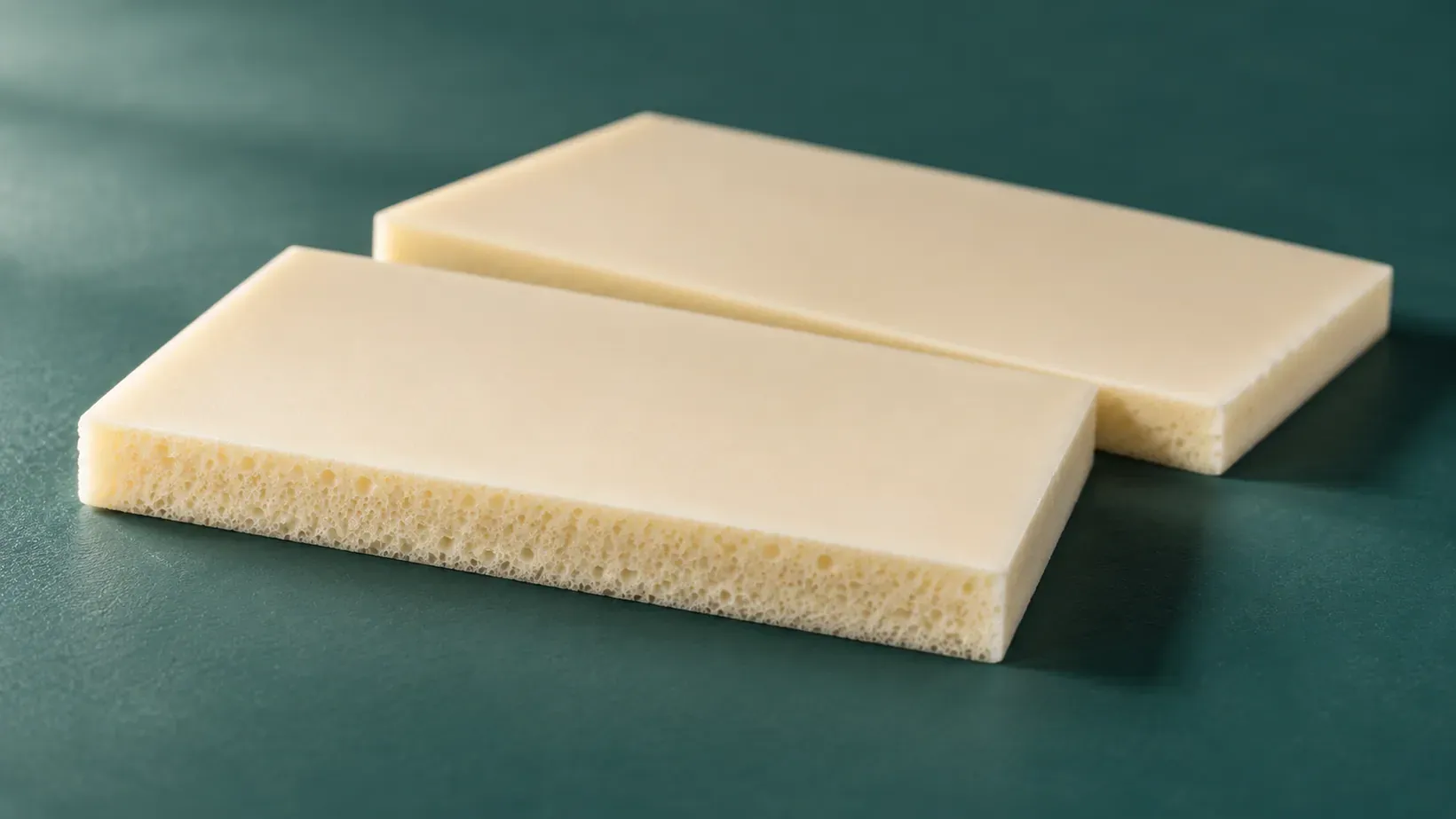
Cover image: AI-generated editorial illustration. Read more resin industry news.